Coding has been explored as an educational tool in the Australian curriculum for some time now (Albion 2015), existing as a niche and being focused on computer programming for secondary school students. ACARA (2015) recognises the need for students to become fluent in the use of Digital Technologies, including it as part of the Australian Curriculum, however the depth to which individual schools teach these skills varies greatly.
Learning the process of computational thinking, where you follow the same set of logical rules that computers do, is a valuable skill for students to develop. Sterling (2015) describes the merit of students learning coding as giving them an appreciation of what can be built using technology and understanding how it works. He goes on to outline the benefits of learning computational thinking as “understanding of how to express concepts so that a computer can perform tasks accurately and efficiently”. Utilising coding using tools such as Micro:bit and MakeCode enable students to perform their own experiments and investigations into the nature of computational thinking and the cognitive tools it requires.
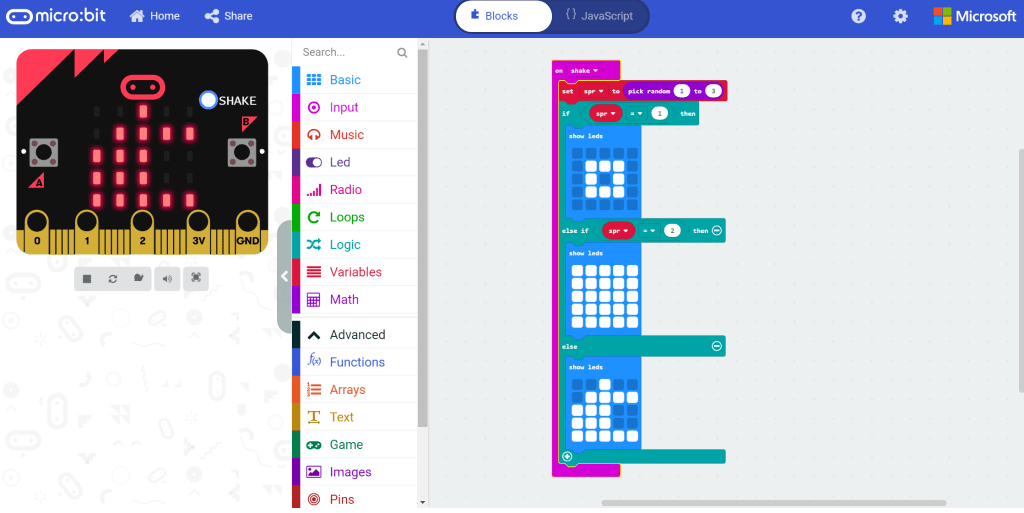
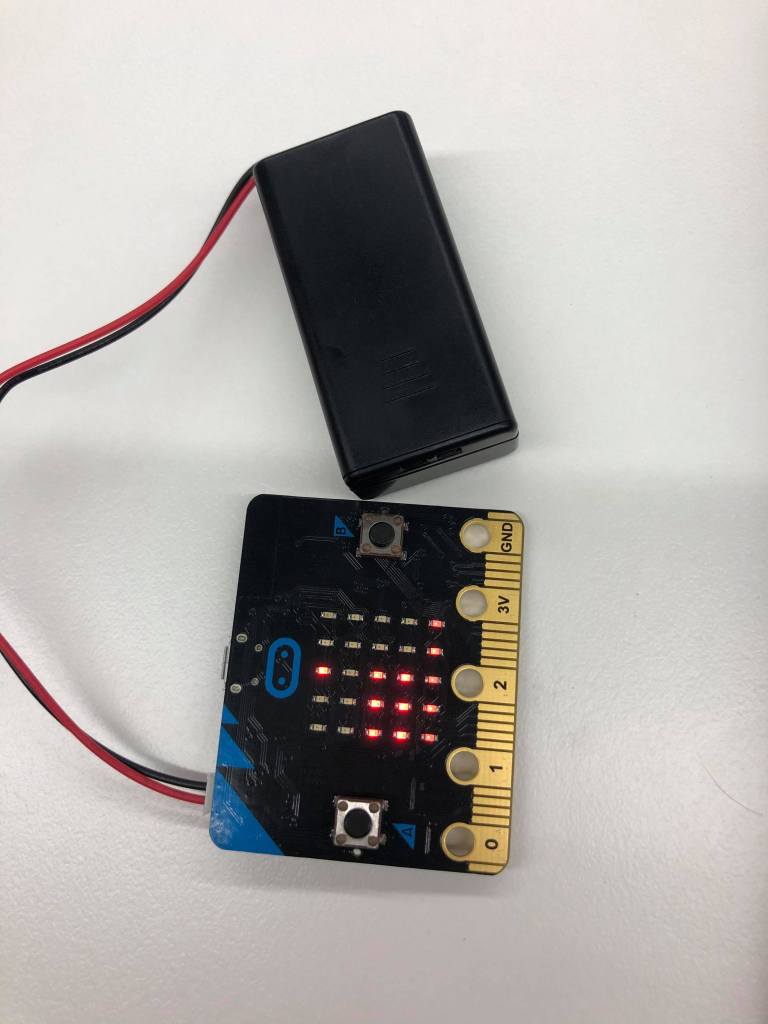
My own investigations into coding and computational thinking made use of a Micro:bit that was programmed to play rock, paper, scissors. Using MakeCode, a script was written that instructed the Micro:bit to randomly generate a number between 1 and 3 when shaken, and display an image of a rock, paper or scissors that were assigned to each number 1, 2 and 3. MakeCode was intuitive to use, consisting of block commands that the user arranged to produce a JavaScript that the Micro:bit could read. This ease of use allowed me to devote my attention to problem solving and thinking computationally; the experience was genuinely rewarding.
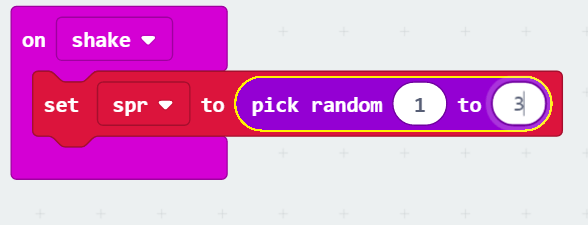
The first step: generating a random number 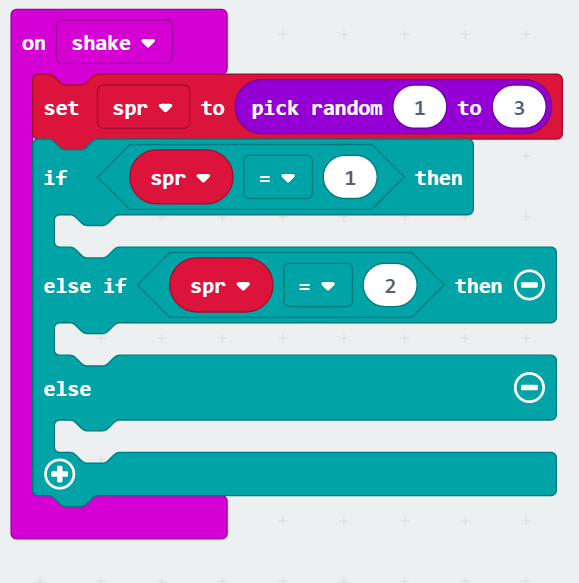
The second step: assigning each number a function 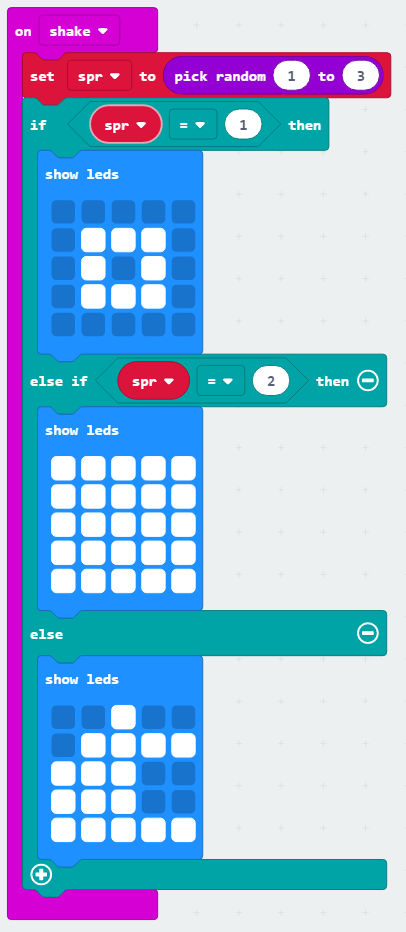
The final step: creating LED patterns for each number
My own experience leads me to believe that high school science students would benefit in similar ways. Tasks could be designed that require students to produce a code that serves a defined purpose such as I did, serving as a tutorial of sorts before allowing students to perform investigations and experiment with the tools at their disposal. Micro:bits can be programmed online for free and are relatively inexpensive, coming in at $25, making them a viable option for many classrooms.
References:
Australian Curriculum, Assessment and Reporting Authority (ACARA). (2015). Digital technologies: sequence and content. Retrieved at: https://docs.acara.edu.au/resources/Digital_Technologies_-_Sequence_of_content.pdf
Albion, P. (2015). The second coming of coding: will it bring rapture or rejection? Quick. 2(130), 23-26
Sterling, L. (2015). An education for the 21st century means teaching coding in schools. Retrieved from https://theconversation.com/an-education-for-the-21st-century-means-teaching-coding-in-schools-42046
All images are my own.
 EDUC3620 Digital Creativity and Learning ePortfolio
Hi Nathan.
Thank for writing about computational thinking and the Microbit. I particularly liked how you referenced the ACARA standard for digital technologies. One query I would like to ask is: how does computational thinking foster creativity? Microbit is a great tool for fostering computational thinking, but I want to take it one step further.
I enjoyed the sample works that you’ve produced, as it gives everyone a good idea of how Microbit works.
LikeLike