3D modelling and printing has the potential to be utilised as a valuable tool in project-based learning approaches, inquiry-based learning activities and investigative tasks. 3D modelling, as an active learning process of designing and creating, allows students to express and develop their creative ideas, utilise problem solving techniques and nurture creativity (Torrey and Maloy 2017). Furthermore, student’s spatial reasoning can be improved by use of 3D modelling software (Kurtulus and Uygan 2010), increasing their capacity to visualise an object from multiple viewpoints, perform operations on the object (rotate and orbit) and blend the object with others (Turgut and Uygan 2015).
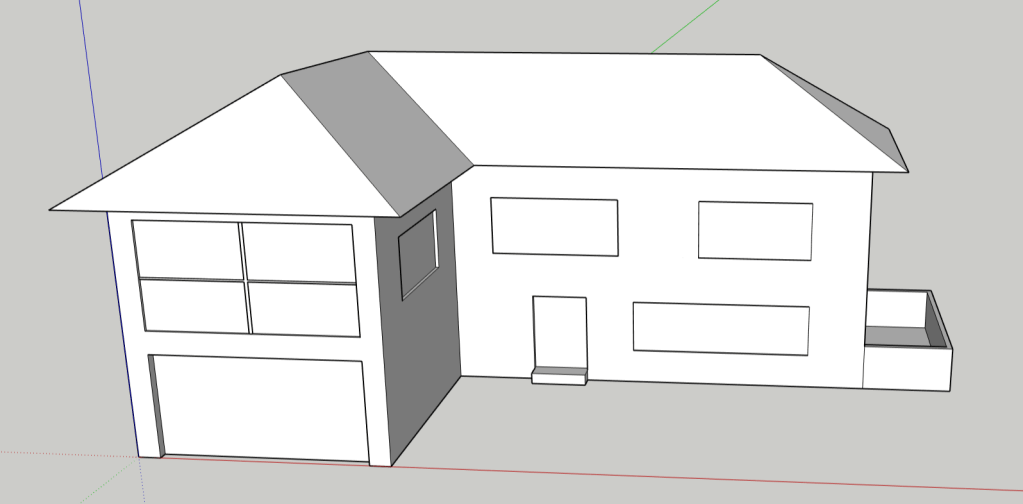
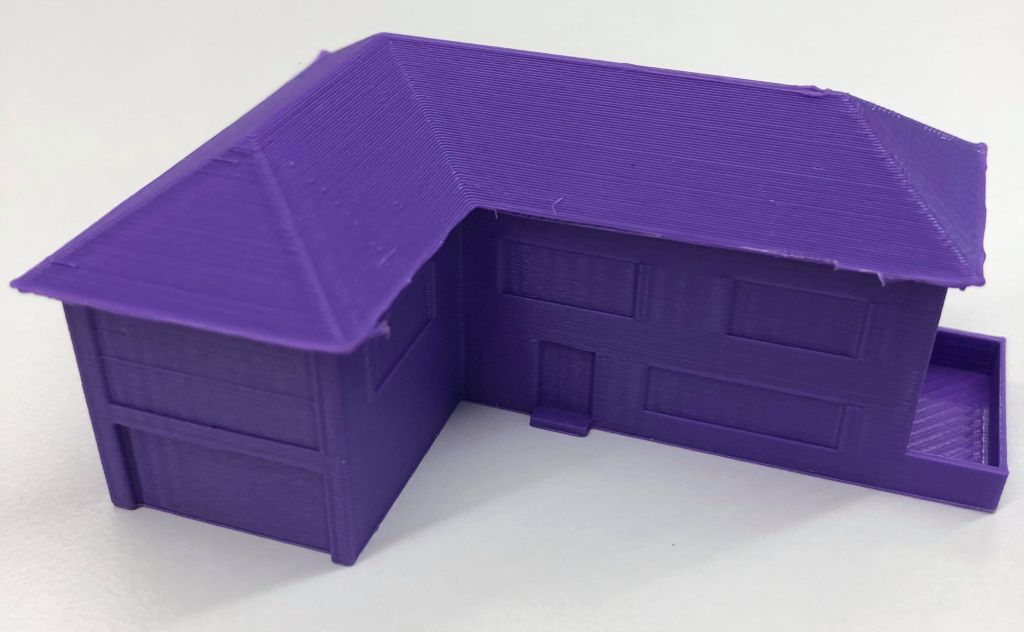
Google SketchUp is a software package available as a browser client and desktop application that was developed to make 3D modelling accessible for people without extensive prior training. My experience with SketchUp was in designing a house. I found that I entered the design process with some initial ideas of how my finished product would look but as I investigated the tools at my disposal and learnt more about the software these changed. While watching tutorials I expanded upon what I had initially envisioned based upon what I saw was possible and threw out other ideas in favour of better ones. Experimenting with tools like push/pull, follow me and measure played a part in settling on a final design.
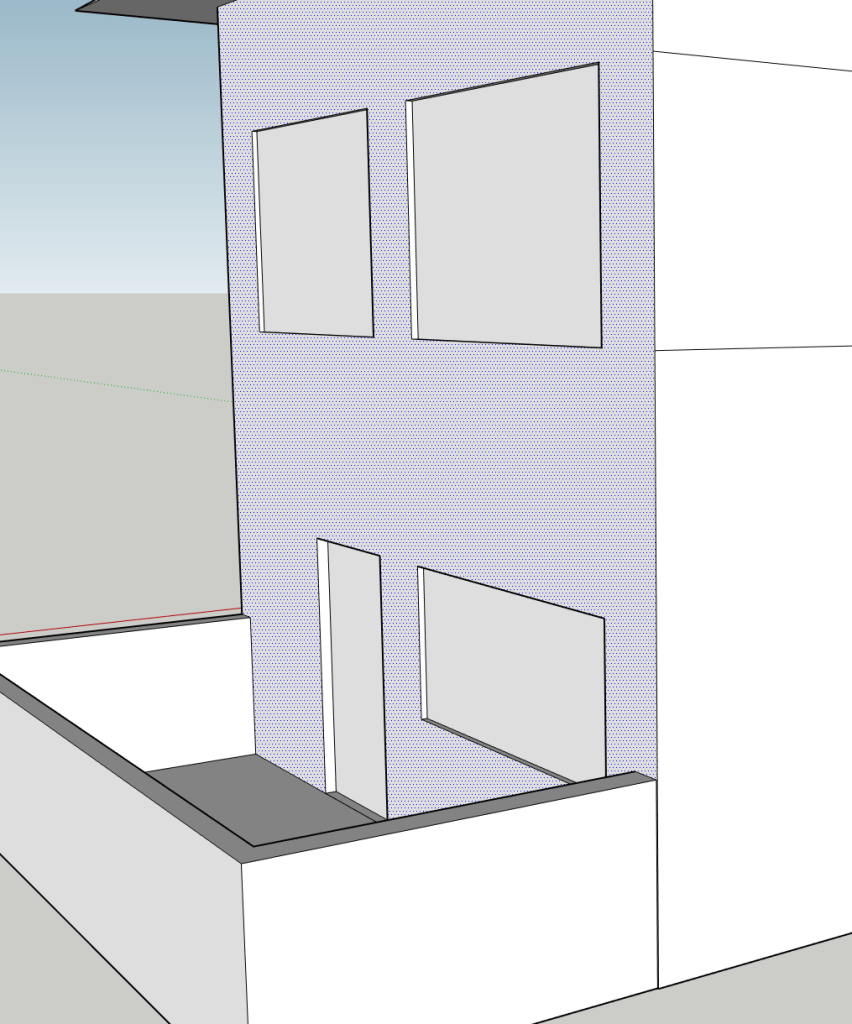
Windows and doors were indented 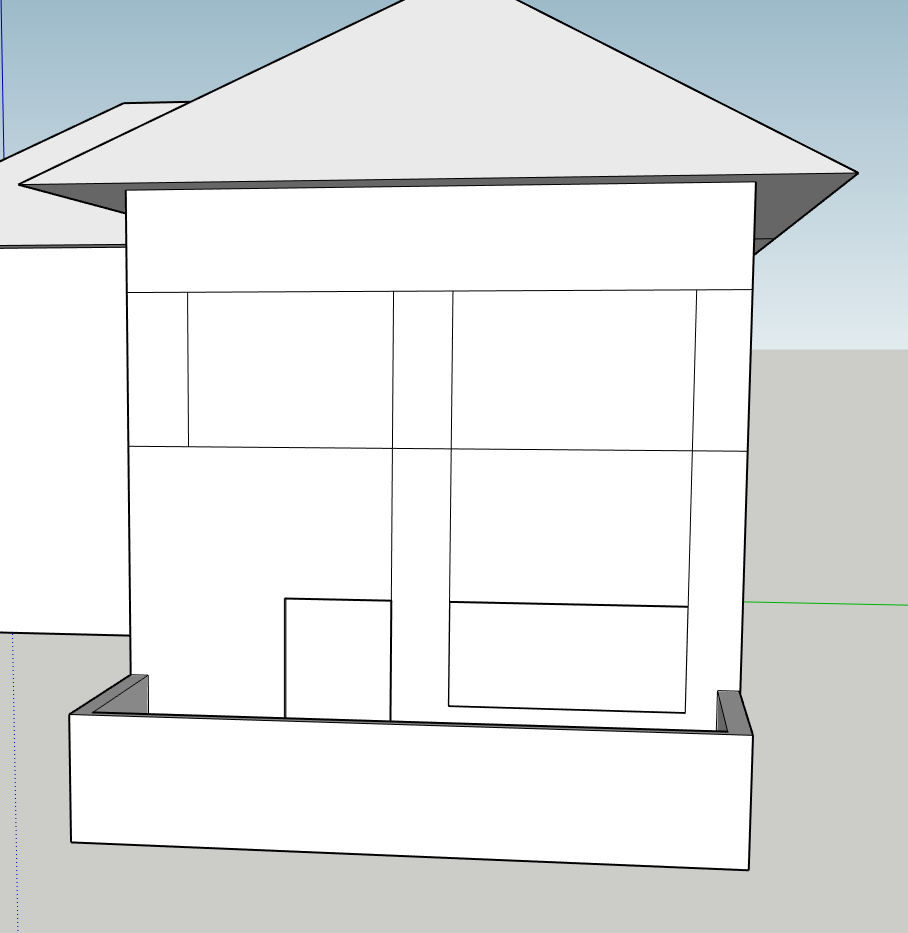
parrallel lines allowed for symmetrical window placement 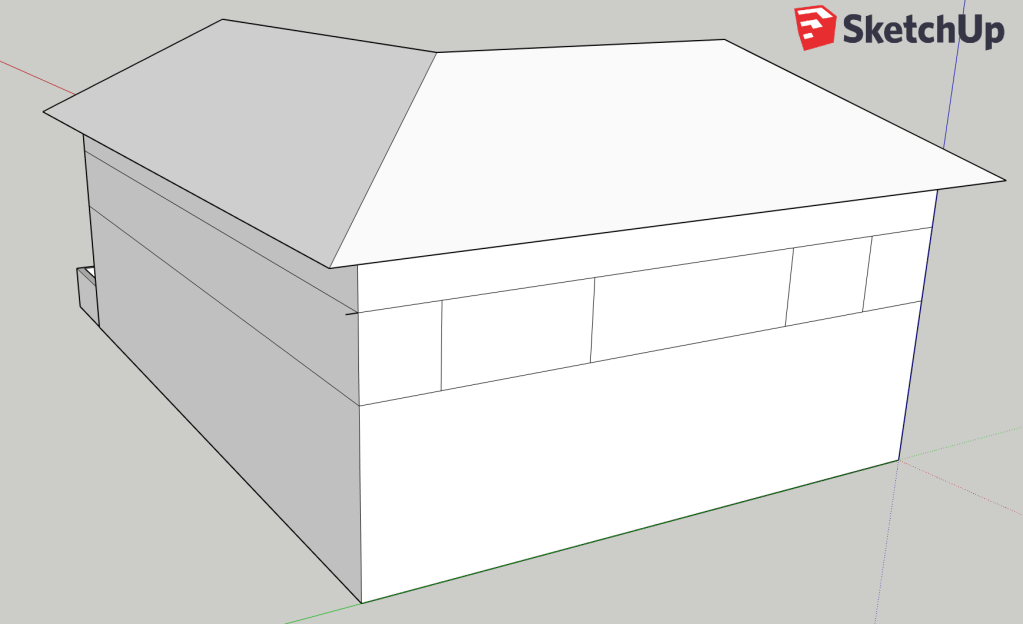
lines extend around the entire building to ensure even placement
I started to incorporate elements of symmetry into my design, especially with window placement, using midpoints to centre features and creating a series of parallel lines around the entire building to guide placement. I found that indenting windows and doors created depth and made my design more aesthetically pleasing.
3D modelling can be used to great effect in secondary science classrooms as design and experimentation are intrinsically linked with the science syllabus. Activities requiring students to create a 3D model of a tool to be used to solve a given problem or creating a model of an existing object to better understand its function will develop spatial reasoning and foster creativity.
While 3D modelling has many benefits, it is not without potential drawbacks. Schools must have access to expensive 3D printing units for students to see their finished products. It may be time consuming to properly train students in the use of relevant software and printing errors (as a result of flawed design or printer error) can be discouraging.
References
Google SketchUp: sketchup.com
Kurtulus, A. and Uygan, C. (2010) The effects of Google Sketchup based geometry activities and projects on spatial visualisation ability of student mathematics teachers, Procedia Social and Behavioral Sciences, 9, 384-389.
Torrey, T. & Maloy, R. (2017). Why 3D print? The 21st Century skills students develop while engaging in 3D printing projects, Computers in the Schools, 34(4), 253-266.
Turgut, M., Urgan, C., (2015) Designing Spatial Visualisation Tasks for Middle School Students with a 3D Modelling Software: An Instrumental Approach, The International Journal for Technology in Mathematics Education, 22(2), 45-51.
All images are my own
 EDUC3620 Digital Creativity and Learning ePortfolio
Hi there,
Your finished 3D print is impressive! I am curious, for time framing for students, how much time did you put into your design?
Also, I found it interesting that more than once you referred to the aesthetics of your design. Have a read of my blog post to contextualise the following comment, but this is one of Donald Norman’s levels of design! And, though you didn’t comment on it, your design is also functional. But because you did comment on aesthetics I image that his theory about third level, reflective, would reveal to us that aesthetics is more the image you’d like to align with. What a fascinating journey that would be to go through with the students too!
My blog – https://digitaltechnologyintheclassroom.home.blog/2020/03/14/design-based-thinking-via-3d-printing/
Donald Norman talking about his 3 levels of design – https://www.youtube.com/watch?time_continue=4&v=RlQEoJaLQRA
Miss Wilkes
LikeLike